A high-energy rockfall protection fence compliant with new standards has received the first-ever third-party certification in Japan.
Vertex's "Loop Fence" sets a new standard for slope disaster prevention with a maximum load capacity of 1,500kJ.
~Demonstrating overall reliability through real-world testing and numerical analysis. Leading the way in strengthening national resilience with a one-stop technology encompassing design, construction, and repair.~
Vertex Co., Ltd. (Headquarters: Chiyoda-ku, Tokyo; President: Yuzuru Yamamoto; hereinafter "Vertex") has obtained "Construction Technology Review Certification (Construction Technology Review Certificate No. 2602)" from the Japan Civil Engineering Research Center for its high-energy-absorbing rockfall protection fence, "Loop Fence".
Since the introduction of performance verification standards based on full-scale experiments and numerical analysis in the "Rockfall Countermeasures Handbook (Revised December 2017)," this is the first time in Japan that a high-energy-absorbing rockfall protection fence has received this certification.
Vertex positions this technology as the next-generation standard for slope disaster prevention, and will strongly lead the strengthening of national infrastructure against increasingly severe natural disasters through comprehensive lifecycle support from survey, design, and construction to maintenance and management.
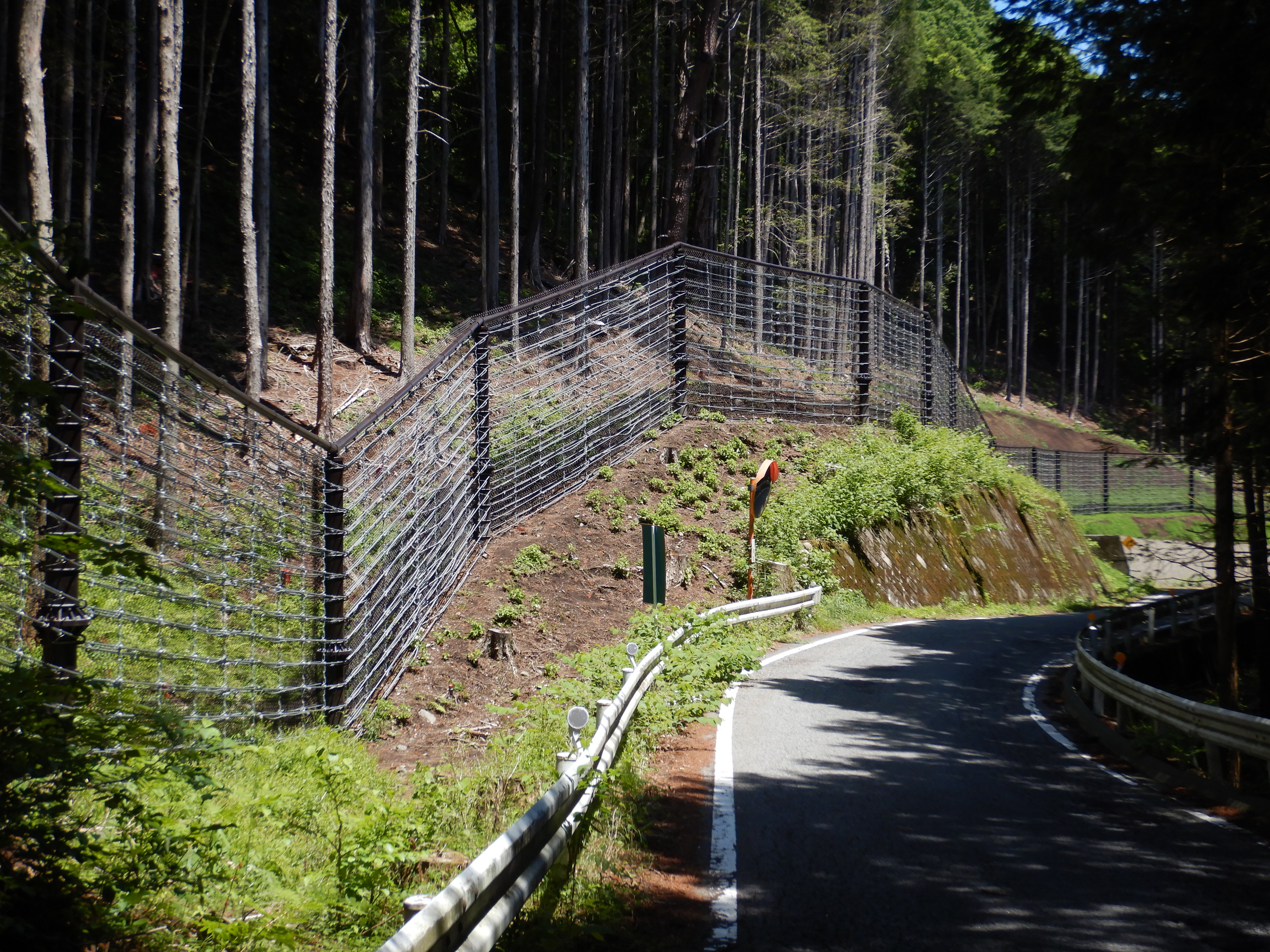
Loop fence (installed as a pile structure)
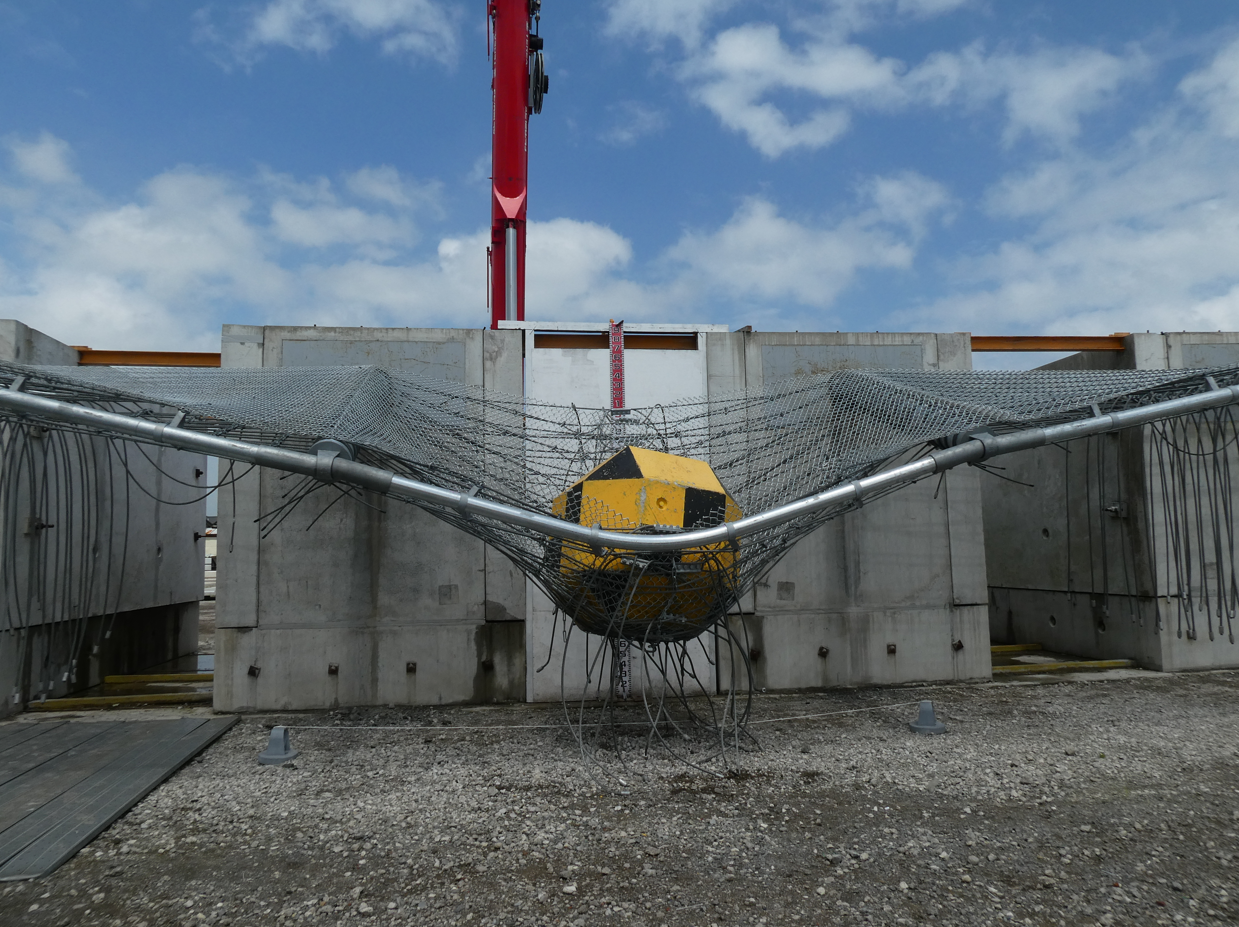
Actual experiment: Intermediate span capture status
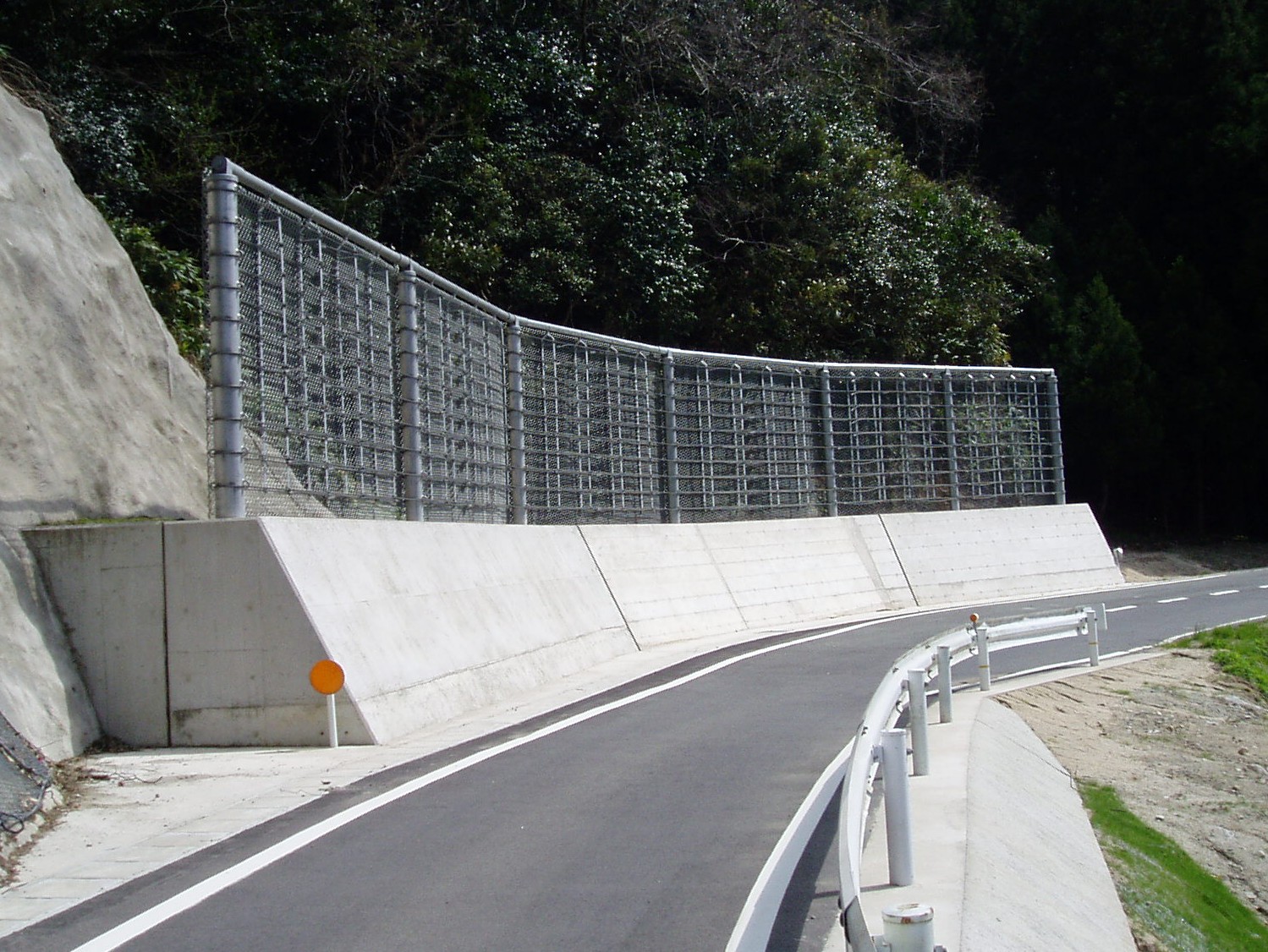
Loop fence (installed on foundation structures)
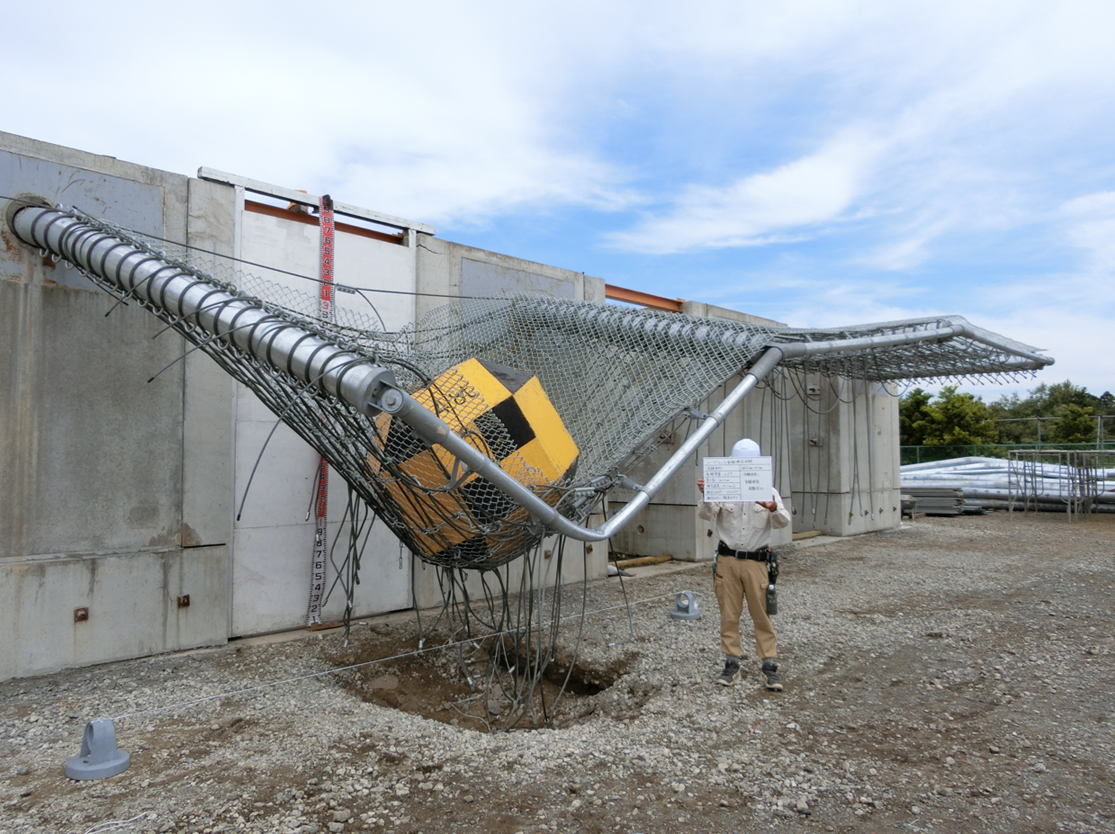
Actual experiment: Terminal span capture status
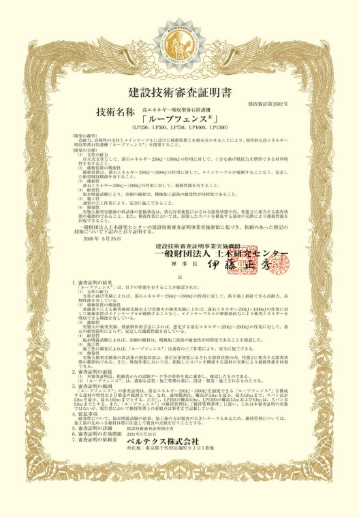
Construction Technology Review Certificate
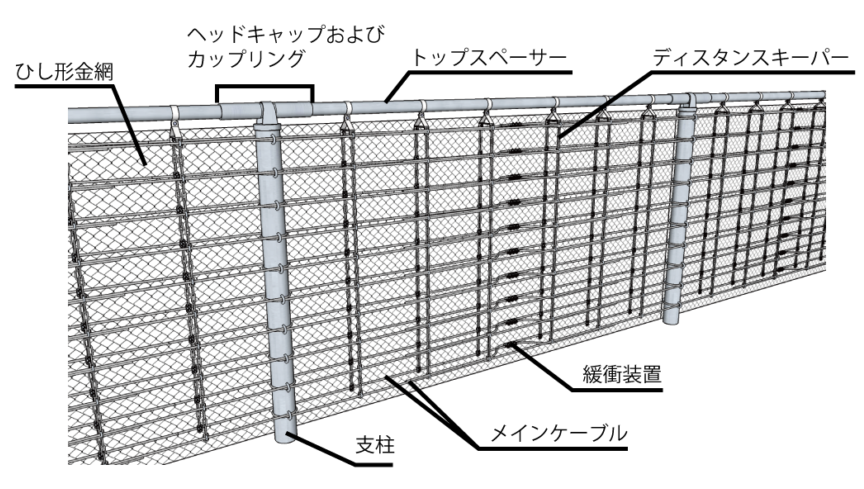
Structural overview diagram
In recent years, the risk of rockfalls in mountainous areas and along major roads has been rapidly increasing due to the frequent occurrence of localized torrential rains and large typhoons associated with global warming. Heavy rains loosen the ground on slopes, and the water pressure that seeps into the gaps in the rocks causes sudden rockfalls, making them extremely difficult to predict in advance.
Currently, there are many slopes around roads, railways, and residential areas in Japan that pose a risk of falling rocks.
Rockfall prevention measures can be broadly divided into the following two categories:
- Rockfall prevention measures: Measures to prevent rockfalls and rock movement by fixing rocks in place.
• Rockfall protection measures: These measures use protective fences and other barriers to stop falling rocks and prevent them from reaching roads and buildings.
Conventional rockfall protection fences, a type of rockfall protection structure, are widely used throughout Japan because they can be installed relatively cheaply and in a short period of time.
On the other hand, conventional rockfall protection fences are primarily designed to handle relatively small rockfalls of up to about 50 kJ. For larger rockfalls, countermeasures involving large-scale structures, such as "rock sheds" that cover roads like a roof, have been necessary.
However, large-scale structures such as rock sheds face the following challenges:
1. High construction costs
2. The construction period is long, and the impact on traffic due to the construction is significant.
3. Planning and designing can be difficult if road rerouting or route changes are planned for the future.
A "loop fence" is a high-energy-absorbing rockfall protection fence composed of support posts, buffer devices, main cables (wire ropes), diamond-shaped wire mesh, and other components.
The main cables are arranged in a loop between adjacent support posts, and buffer devices are attached to the overlapping sections of the cables. When a rockfall strikes, the main cables slide through the buffer devices, creating friction that absorbs the impact energy of the rockfall. Furthermore, the support posts and wire mesh also deform and bear the force, so the entire structure absorbs the impact in stages, stopping the rockfall.
Furthermore, the structure employs a design where the space between two adjacent support pillars is treated as a single, independent capture section. This ensures stable capture performance regardless of which section the falling rocks hit.
1. Performance verified through full-scale crash tests and numerical analysis.
We conduct full-scale impact experiments that meet the performance verification conditions outlined in the "Rockfall Countermeasures Handbook (Revised December 2017)." Furthermore, by combining this with "numerical analysis," which reproduces the movement of protective fences and falling rocks on a computer, we verify conditions that are difficult to confirm through full-scale experiments alone. By confirming performance from both full-scale experiments and numerical analysis perspectives, we ensure high reliability.
2. Responds to high-energy rockfalls of up to 1,500 kJ.
Instead of relying solely on the support posts to absorb the impact of falling rocks, the entire structure—including wire ropes, buffer devices, posts, and wire mesh—absorbs the impact gradually and efficiently. This allows it to capture rocks with high energy, which would be difficult to handle with conventional rockfall protection fences.
3. Disperses impact with a unique loop structure.
Its unique loop-shaped wire rope structure distributes the large force generated when a falling rock collides with the structure across multiple components. By preventing the force from concentrating on a single component and absorbing the impact as a whole, it suppresses the penetration of falling rocks and exhibits high capture performance.
4. Suppress the overhang after rockfall capture.
By employing loop-shaped wire ropes, the overhang of the protective fence towards the valley side when catching falling rocks can be reduced compared to typical single-wire types. This minimizes deformation of the protective fence after catching falling rocks, reducing the impact on roads and surrounding spaces.
In this construction technology certification process, not only the ability to withstand falling rocks was checked, but also material performance, constructability, and repairability.
The main items to check are as follows:
• Structural performance: The ability to stably withstand large-energy rockfalls.
• Material performance and corrosion resistance: The components used must possess the necessary performance characteristics and measures must be taken to prevent rust and other corrosion.
• Ease of installation: The structure and construction method must allow for proper installation on-site.
• Repairability: The ability to identify and replace damaged components after receiving a falling rock.
• Maintainability: Easy to inspect and repair after installation.
"Loop Fence" is a rockfall protection technology whose overall reliability, including safety, durability, constructability, and repairability, has been confirmed through performance verification using full-scale collision tests and numerical analysis, as well as rigorous review by a third-party organization.
Vertex addresses the social challenge of countermeasures against high-energy rockfalls with its comprehensive technical capabilities, from on-site surveys, analysis, design, and construction to post-installation maintenance. Taking this construction technology certification as an opportunity, we will promote the widespread adoption of "loop fences" and contribute to improving safety at rockfall-prone areas nationwide. Moving forward, we aim to realize a sustainable society by providing disaster prevention infrastructure that excels in safety, durability, constructability, and maintainability, thereby protecting people's lives and social infrastructure.
Going forward, we will further enhance the rockfall energy capture and absorption technology cultivated with "loop fences" to address high-energy rockfalls exceeding 1,500 kJ.
Furthermore, we will expand into new areas, such as improving the performance and upgrading existing rockfall protection facilities. In addition, we will apply the technology and knowledge accumulated through full-scale experiments and numerical analysis not only to rockfall countermeasures but also to various slope disaster prevention fields, including sediment-related disasters, thereby contributing to the development of comprehensive disaster prevention infrastructure technology.
For details regarding the certificate awarding ceremony, please visit the website of the Japan Civil Engineering Research Center.